
Meet Our Staff
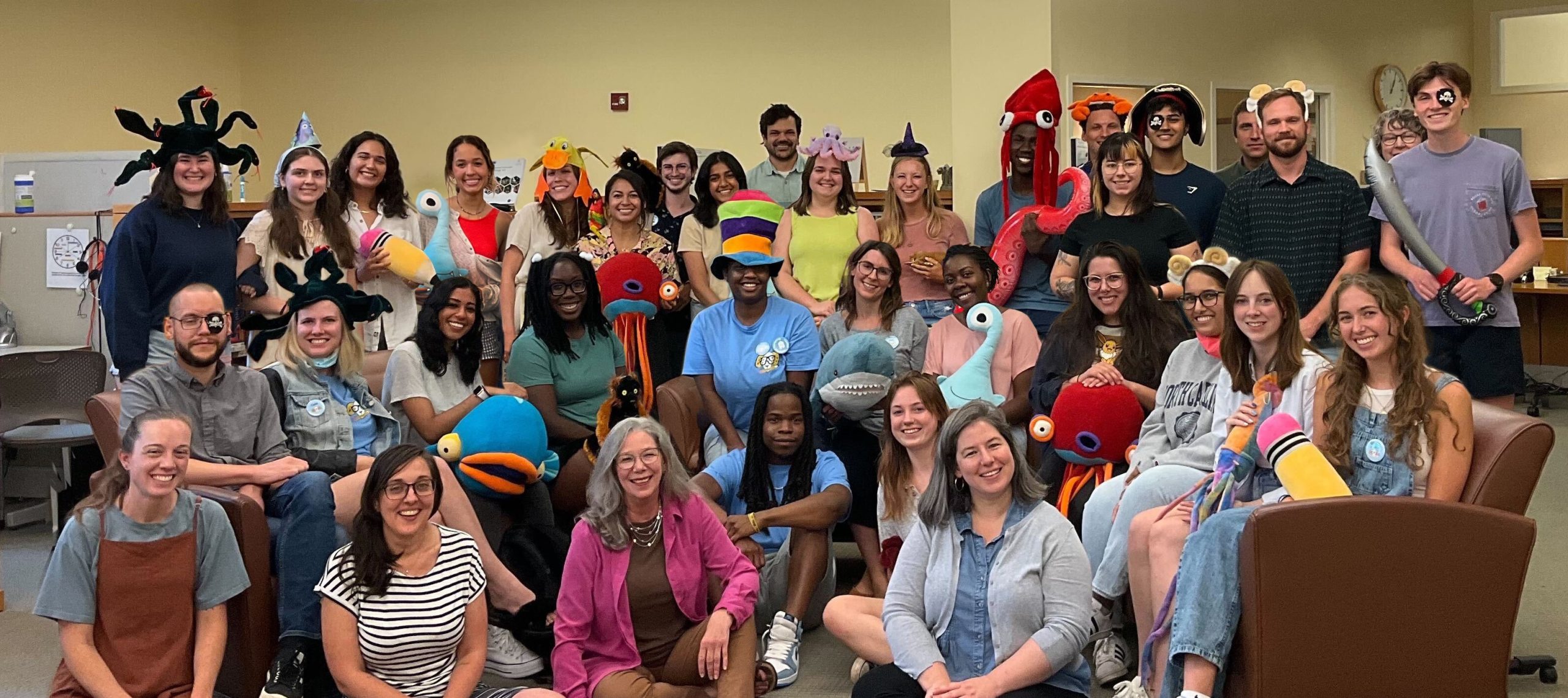 UNC Writing Center staff and coaches.
Full-time Staff
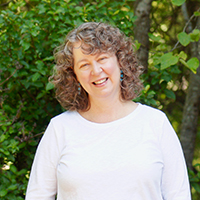
Kimberly Abels, Director
writing_center@unc.edu, (919) 962-4426
Dr. Abels has led the student-centered, tech-savvy professional and student communities that compose Carolina’s Writing and Learning Center for over twenty years. She collaborates with colleagues and campus partners to build Writing and Learning Center services and fosters environments where students imagine, discover, reflect, and stretch into new ideas and academic habits.

Gigi Taylor, Senior English Language Specialist
vgtaylor@unc.edu, (919) 962-0725
Dr. Taylor helps writing coaches, faculty, and staff provide effective writing support for students whose first language is not English. She also provides instruction about academic communication, English language, and American culture for UNC’s international students and scholars.

Warren Christian, English Language Specialist
warren@unc.edu, (919) 843-9604
Dr. Christian helps writing coaches, faculty, and staff provide effective writing support for students whose first language is not English. He also provides instruction about academic communication, English language, and American culture for UNC’s international students and scholars.

Alex Funt, Assistant Director
tafunt@email.unc.edu, (919) 966-8924
Dr. Funt hires, trains, supervises, and mentors the Writing Center’s team of undergraduate and graduate student writing coaches. He also collaborates with Writing and Learning Center staff to manage our digital media presence as well as our marketing and communications efforts on campus. Alex has a PhD in English Rhetoric, Composition, and Literacy from UNC Chapel Hill and is an alum of the Mississippi Teacher Corps.

Franny Brock, Writing Coach Specialist
mfbrock@live.unc.edu, (919) 962-4799
Franny helps train and support the Writing Center’s undergraduate and graduate coaches. She provides feedback, mentorship, and leadership for a large coaching staff and supports them in their professional development. Franny has a master’s degree in Art History and a background in museum education, curatorial work, and teaching.

Donovan Wright, Administrative Support Specialist
donwrigh@email.unc.edu, (919) 962-7710
Donovan provides logistical support to Writing and Learning Center coaches and staff on a daily basis. As the Administrative Support Specialist, Donovan will likely be the first face you see when you visit our location in SASB North. He is passionate about creating a welcoming and collaborative atmosphere for student success. Donovan comes to us from NC State but is excited to be a Tar Heel.
Get To Know Our Writing Coaches
The Writing Center’s writing coaches are undergraduate and graduate students from a wide variety of academic disciplines. They receive extensive training in teaching writing one on one. New graduate coaches undergo more than 40 hours of preparation at the start of the fall semester, and undergraduates take a 3-credit-hour course (English 402) to prepare. All coaches receive ongoing training and supervision.
Since each writing coach has an individual approach, we suggest trying out several coaches in order to find the style that works best for you. You can learn a little more about some of our writing coaches by reading their responses to the question “What is writing like for you?”
Adia
Writing is like a phoenix’s renewal. Like the mythical bird, your drafts are constantly being reborn. Constantly rising from ashes. However, in order to rise, there is a certain level of intentionality and courage required. The magic of the phoenix is in the effort it makes to self-destruct, only to regenerate. In this same way, a writer must lean into their work. Strike their pen against paper. Spark flames full of new ideas. Then, set themselves and their words on fire. It is true then, that writers are the real phoenixes today. Because no matter the setbacks, to write is to willingly be reborn, healed, and most importantly…made new.
Amery
Writing is like building a friendship. When building a relationship with someone, what do you do to find out more about them? How do you enter their world? Often, you can start by doing the activities they enjoy. You might start putting yourself in their shoes for a little while, trying to see the world through their eyes. You might start asking them questions about their values or their perspective. As you learn to communicate in their terms, the two of you develop a shared language. The same mindset that drives a good friendship—curiosity, the drive for mutual understanding, and ultimately, compassion—is ultimately the mindset that helps you build relationships with distant readers. It’s impossible to meet your writing goals, whether you are trying to persuade or express your thoughts, if you don’t use a shared language to engage your reader in good faith. Considering your reader’s values, respecting their voice, and regarding them as an equal is essential. Your readers might be very different from you, and you may even be using your paper to argue against their views. Remember, however, that sometimes these differences are how the best friendships start. Both friendship and writing are active processes. Strengthening a friendship requires constant renewal, just like how writing requires continued attention and revision. Yet the rewards of both are great. As you use writing to reach out to your invisible reader, don’t be surprised if you find them reaching back out to you, engaging you in rich dialogues, and teaching you new things about yourself.
Ana
Writing is like starting a new job. It’s possible you might not understand what exactly is expected of you once you’re hired. You’ll have to go through training, shadowing, and some practice before you start on your own. You’ll have to find what strategies work best for you and even consult some outside resources.You’ll be acquainted with colleagues that help your performance and others that you’ll choose to steer clear of. Once you begin to work independently, it still may be a while before you truly get the hang of it, you may still have questions and even be frustrated at the tasks at hand. Things may be unclear or there may be some things that you simply don’t want to do, but over time you learn to enjoy certain parts of your work life and even look forward to it. There will be times, even with years of experience under your belt, where you don’t know the answer to everything. Challenges will present themselves and new roadblocks will come abruptly, making new ventures opportunities for growth and improvement. You may realize that this job isn’t the one for you, and start the process all over again, which is okay. Regardless of whether or not you find the perfect job, you’ll always be learning and bettering yourself through it, just like writing!
Ann
Writing is like vegetable gardening. Like growing from seed, writing requires significant effort to produce something valuable. You take time to plan and prepare – maybe with some time pressure of the seasons or a due date! – thinking how to yield produce that provides nourishment, appeals to the consumer, and/or meets expectations in quantity. You might try different approaches to soil preparation or seeding, to brainstorming or outlining, learning over time what works well for you. Though it can feel solitary sometimes, this work is not done in isolation; you may draw on the wisdom of predecessors or work in dialogue with others in the field. You might pay attention to the tastes of your audience and think about what venues showcase your produce most effectively. Even with hard work and careful consideration, sometimes the outcome is still not what you want – but there is always an opportunity to learn and to bring that learning into the next season or writing project. Growing vegetables and writing can connect us to each other, ground us in our intentions, and offer a way to enact change.
Bhairavi
Writing is like flying for the first time. There are 3 stages with any flight – boarding the plane, hurtling through the air, and finally, the sweet landing. As you’re walking through the jet bridge, there’s nervousness mixed with excitement, much like a writer opening a blank page. What if your luggage gets lost? Or there’s a baby kicking and screaming behind you? You brush these thoughts aside and board the plane, still excited for a new destination – maybe a tropical paradise or a brooding mountain getaway. Like getting those first words on the page, the flight takes off and you’re in the air. You soar above buildings, looking out the window and it hits you that you’re flying! Perhaps your flight is long enough for the refreshment cart to come rolling out. You slowly crunch on pretzels and sip apple juice while pulling up the flight map. You look at how many words you’ve written down, how many thoughts on the page, but also how many more miles left of your trip. The captain soon announces landing, and you fasten your seatbelt, bracing yourself for a (hopefully) smooth landing. Before leaving the plane, you gather your belongings, grab your carry-on baggage from the overhead bin and exit the plane to be greeted with your destination.
Cate
Writing is like playing a difficult RPG. Now matter how many times you die, you keep returning to the menu and starting anew. Some enemies might be harder for you to face than others, and you may find yourself adapting your play style, co-oping with other players, grinding, or seeking tutorials. Maybe you’re a hyper-aggressive player constantly applying offensive pressure, or maybe you’re a more patient, tanky build waging that war of attrition. Once you’ve arrived at that perfect build, few things are more satisfying than finally mowing down that boss. And who knows–on subsequent playthroughs, the boss who halted your progression the first time around may turn out to be a cakewalk.
Diana
Writing is like learning to drive. When I first started, I was so terrified that my hands would shake whenever I had to turn the key of the ignition. Having my dad as my teacher did not make the experience any better, and having a bad teacher or failing your driving test may make you apprehensive to get behind another wheel again. All the buttons. The highway that you’ve never driven on before. Constantly checking to make sure you’re at the right speed limit, didn’t miss a turn, or reach an empty tank. We start learning to drive with incredible attention to every maneuver we make, but, once we get the hang of it, driving can be freeing. Sure, not everyone will become a NASCAR driver in their lifetime, but we all have to use driving everyday as an essential tool to get to destinations. We write to get to destinations too; application essays for colleges, resumes for job searches, e-mails to peers and co-workers, text messages to friends about how great or awful our days were. Sure, everyone drives a little bit differently (like my grandma, who for some reason presses the gas pedal with her right foot and brakes with her left, which is probably not the best way to go about it actually…), but we all get to our endpoint eventually, even if at different speeds or on different roads. At the end of the day, we can all ultimately find comfort in the fact that even the most experienced drivers have to think over the general rules of the road and sometimes fail at parallel parking the first time, too.
Elisabeth
Writing is like decorating a room. When you start off, you need some sort of theme, color-scheme, or even a vibe to make it have purpose and be reflective of your preferences. Maybe you love farm-style kitchens, or maybe you can’t get enough of all things steampunk. You could really like neutral tones and most of your walls could be minimally decorated. Whatever the case may be, a room that feels right to you and is welcoming for your guests takes effort and attention to detail. Decorating takes time and likely isn’t something you can do well if you rush it in a single day. And without a theme that seems interesting to you, the task of decorating can seem unenjoyable. If you love kittens but hate rabbits, you wouldn’t want to decorate your room with a bunch of fluffy bunnies, right? Unfortunately, you do have to be realistic with decorating. You don’t have an unlimited budget to make your dream bathroom or you could be working with a limited number of decorations. Nevertheless, you can still find some unique piece that ties the room together for you.
Hannah
Writing is like taking a trip on an airplane. You never really know quite what you’re getting into with the journey—between your arrival at the airport and the final touchdown of the plane wheels at your destination and the first draft and the conclusion, a lot can happen. You might get stopped at the security checkpoint with some writers’ block or end up with a delayed flight. Or worse, maybe your flight was canceled, and you have to start all over again. (My personal experience with the writing process usually involves some significant procrastination-induced delays.) Your takeoff might be a little rocky, or it might be the middle section where you run into some turbulence. But regardless of your experience with the journey and the writing process, eventually you’ll get to your destination and come out of it a little tired, but hopefully not too worse for wear.
HC
Writing is like a paint palette. Inspiration strikes! You witness a beautiful mountain landscape to capture with your paint brush right. Your breathtaking subject acts as a reference point to ensure that your painting encapsulates its likeness the way you envision. The best works of art, though, are those that aren’t traced or identical to their reference; rather, they create a representation that is uniquely theirs. Now it’s time to select your colors from millions of combinations. This can seem daunting, so it’s great to remind yourself that the process is gradual. Tried and true base colors act as the foundation to your palette. Perhaps you’ve also collected combinations from other artworks you’ve created in the past. You take two colors, yellow and blue, unsure of what they will create. As you swirl them together with your palette knife, a new color reveals itself: green. This is a great start, but its pigment doesn’t quite compliment your reference. So you experiment, adding a pinch of blue, and maybe a dash of black to darken the color. The result of this is a deep, rich forest green. You repeat these steps again and again to concoct the perfect palette to paint with. This process is laboring, but rewarding, as you are left with a vivid masterpiece that you’ll sign as your own.
Grace
Writing is like doing your laundry. The task can seem daunting, especially if you’ve let it build up, but actually accomplishing it can be meditative. First, you must secure your supplies – your favorite detergent and dryer sheets acting like the quotes and notes you’ve compiled to incorporate into your work. The process and attention to detail in sorting your clothes is like breaking down ideas into bitesize outlines. Switching the loads and hanging some stuff out to dry is like working through the first paragraphs and first drafts. By the time you get to the folding stage, the finish line is in sight and the rhythmic process is like the reviewing of your work, smoothing out corners and crisping edges before looking back at what you’ve accomplished. Then, finally, you can shut the drawer or press submit with a feeling of relief and satisfaction.
Jessica
Writing is like a middle school dance. It always begins with an awkward interaction between the writer and the paper, the middle-schooler and the dance floor—both insecure and overwhelmed. The courage it takes to be the first to dance mirrors the bravery needed to flesh out undeveloped ideas. Like a dark, crowded gymnasium, your brain is full of random thoughts that you don’t yet recognize under this dim lighting, much like your classmates in their new fancy attire. When you finally get the courage to enter the dance floor, the worry of grammatical perfection and stylistic excellence feels like the self-conscious tug at the hem of your new dress, hoping that no one notices how it doesn’t quite fit. However, after finally joining your friends on the outskirts of the human circle, you begin to dance. You let your thoughts and pen flow freely and your limbs loosen to the music, enjoying the process and undeterred by the possibility of an imperfect product or performance. It is the fun and self-expression within writing—and middle school dancing—that truly matters.
Katie
Writing is like being the seeker in a game of hide and seek. When you finish counting and open your eyes, you never immediately know which way you should go. You know that what you seek is out there somewhere, but there are many different places that it could be. As you choose a direction and begin to search, you check every nook, cranny, and dark corner, afraid that you might miss something. Sometimes you become discouraged; you feel like what you’re looking for should be easy to find, yet it also feels out of reach. But you feel relieved every time you find someone, and slowly your confidence grows. Occasionally you have to double back and explore the places you’ve been before, but you know that this revision is just part of the process. You put in time and diligence, and, before you know it, you’ve found everyone. The game is over, and as you close your laptop, you can pat yourself on the back for the win.
Khalil
Writing is like playing in a tabletop game. No matter the setting, you’re telling a story. Your class, the stats you roll, and your background might inform your narrative, but they do not determine your choices. You won’t always receive inspiration when it would help most… but encountering misfortunes builds your story as much as success. With persistence, help from allies, and support from a great spell list (or bibliography), you’ll eventually score a critical hit. Which path do you choose, traveler?
Miquell
Writing is like therapy. The only difference is that with the former you are putting forth and diagnosing your own deepest thoughts and theories as they relate to whatever you may be writing about and in conversation with, as opposed to a person on the exterior doing the evaluation. It is an unquestionably painful process for me; however, the act of writing never fails to unveil the beauty that is displayed as one comes to terms with their existence through struggle. With this in mind, writing works as a symbiotic process where, on the one hand, you provide insight and theories into comprehending the problems that plague humanity and, on the other, you pave ways for alternative modes of existence that provide a safe haven for all previously marginalized communities.
Miyha
Writing is like washing dishes. We all dread doing it, right? You ignore them for so long that after a few days those 4 dishes have accumulated to 12-16. There may be a slight stench from the dishes and nagging in the back of your mind or from your mom/roommate to get them done but something is always stopping you. After a few days of procrastination, you suddenly feel empowered to take on the task. You remove the dishes from the sink and clean out the debris. Here we can correlate this to brainstorming in the writing process? What do we want to write about? What ideas immediately come to mind. Next, we run the water –adding in dishwashing liquid and setting up space for them to dry. We can relate this to our outline. We have a clear plan where we are headed in our essay. Now here is the big boom—we begin to wash the dishes. We put the dishes in the water and begin to clean them. Although are hands are moving steadily—making sure to clean off all dirt, left over food, grease and everything else yucky—our mind is wondering. We are planning out the rest of our day, adding to the to-do list, and overthinking everything else under the sun. This part we can tribute our rough draft. We let our ideas flow out of our heads and on to the paper. Without boundaries nor limitations. Now that we are done, we can rinse the dishes off and place them on the drying rack. This is our revisioning stage of the rough draft. This is when we read our draft aloud. Adding or deleting words that doesn’t make sense. Maybe reorganizing paragraphs and working on the structure. Our ultimate goal is to make sure our essay is clear, concise, and free of errors. We let the dirty dish water out and clean out the sink. Now, the last step depends on your own judgement. You can put the dishes away or simply leave them drying on the rack. Here is your choice to do another round of revisions or simply submit your final draft. The biggest thing to remember is that you just have to get started. Once you begin, the ideas will flow and the dishes will be done before you know it.
Nathan
Writing is like pruning a tomato plant. A tomato plant has the tendency to grow out in every direction. When writing, you might have many different thoughts that could lead you in different directions. If you let them grow organically, they could become a chaotic mess. A tomato plant with too many different branches won’t allow the leaves to get enough air and can even collapse between its own weight. Sort of like an unpruned essay! But if you carefully prune your thoughts (perhaps setting them aside for a future writing project), directing their energy to where you want it to go, you can coax the plant to grow a single, sturdy stalk that will support and connect all your ideas so that they may ripen.
Olivia
Writing is like taking out the trash. It seems simple enough—collect your ideas, tie them together in a coherent way, and send the final product off to wherever it needs to go. However, writing, like taking out the trash, is never quite as easy as it initially seems. Maybe your trash can is overflowing, but the thought of tying your shoes is daunting enough to make you want to avoid the chore altogether. Writing can be like that. Oftentimes, it’s difficult to sit down and start drafting your first outline or finding the hook for your introduction. Like a trash can, my brain overflows with potential ideas, but I struggle to take the initiative to put them where they belong. However, once I finally put on a pair of shoes and take my trash to the curb, I find myself thinking, why didn’t I do that sooner?
Owen
Writing is like a box of chocolates. Sometimes you get a prompt and, not really knowing where to go with it, you say the first thing that pops into your head and do the best you can to justify it. Maybe your argument is based on a class you’ve taken, a book you’ve read, or a line from a famous movie you saw a long time ago. It can be tricky sometimes, standing by this point you’ve chosen arbitrarily. Maybe you should have started over a long time ago and picked some other topic, but you’re in the thick of it now and refuse to back down. You work around your mistakes and keep writing until you’ve developed something mostly coherent. The point is, when you open a box of chocolates or a new writing assignment there are a plethora of options laid before you, so many potential topics, so many choices of sugary treats. Of course, there are considerations to be made, maybe you’re allergic to some of the candies or you have background knowledge on an applicable topic; but ultimately, your choice is a little bit random, and that’s part of the fun! You never really know what you’re going to get.
Percy
Writing is like scaling a rock wall. You set your eyes on a clear destination, but it’s high above your head, the distance almost insurmountable. There are plenty of footholds and supports at your disposal, but no set path nor single way to utilize them. Whether you stop to plan and strategize or forge boldly ahead, there will be times — perhaps many times — where you find yourself stuck halfway up the wall and need to climb back down to reassess your approach. In these moments, you might discover someone at the bottom willing to help you find your way up. While they’ll do their best to help you along, only you can do the climbing — and when you finally reach the top, you’ll have the satisfaction of having conquered a task that at first seemed far out of reach (and sweated a little while doing it).
Rachel
Writing is like the scientific method. First, we have an observation about the world that we want to know more about. We start by gathering our research materials to learn more about our observations and sometimes, research furiously into the night. We learn more about the subject than we would ever be able to express in our paper and we read research from people in our field who share the same interests. After writing in the margins of books, note taking, and highlighting, we start to understand our own argument and where it fits in with current research. We use our best working knowledge to make an assertion about our observation and we support it with the evidence that we found through our research. And again, we reach out to our community. After our recursive process of research, write, research, write, our study concludes and from a process, we now have a product and our study concludes. Oftentimes by a due date, but sometimes by a personal feeling that a search for knowledge is satisfied and what we take with us is the knowledge of how to do our next study better.
Ripley
Writing is like trying to scratch an itch on your back just out of reach. I’ll have a demanding sense that some sort of question or project is worth investigating, but try as I might, it’s incredibly difficult to figure out how to get my fingers on it. I’ll realize that adaptation and strategy are necessary, and go looking for tools to help me out. Chances are I’ll try a few different classic options (a back-scratcher; a ruler; in my more desperate moments, a wooden spoon), but none of them will work particularly well for me. I’ll eventually ask someone else to help me, and it’s only when I can work in dialogue with another (ask them to scratch my back) that I can work that itch out. And, of course, to follow through on the idiom properly, I’ll be happy to return the favor whenever.
Rory
Writing is like preparing for a marathon. You sign up because you think it’s a good idea, and then it dawns on you that you have to start training. So, you go for your first few runs and are miserable. It’s hot out, you struggle to breathe, and you’re always sore the next day. And of course, there’s this steep hill on your route that you have to deal with. The climb causes your legs to burn and lungs to ache–you’re at the point where you’re ready to give up. But you don’t let that happen. Instead, you start to find ways to make your runs more enjoyable; you stretch before and after, you make sure you have tunes or podcasts to listen to, and you change up your route to get some different scenery. After adding these small tweaks, you realize you’ve started to add more distance to your runs, and that your mile time keeps dropping. Eventually that one hill isn’t so bad to run up. In fact, you start to enjoy pushing yourself to reach the top, and relish the challenge. Soon, the race itself becomes incidental. Sure, the medal you get after crossing the finish line is cool, and that post-race meal is one of the best you’ve ever had, but their importance as end-goals melts away. Instead you realize the most important thing is getting outside and relying on your own feet to get you back home.
Sam
Writing is like sweating. Hopefully you are prepared for it, but sometimes it presents itself at inopportune moments. Some folks hate the sensation. It can feel awkward to share the experience with others, although you might appreciate the support of those who do it often. If you can embrace the opportunity, sweating and writing can be cathartic, expressive, and maybe even fun. You will probably need a shower afterward, but you may find a sense of accomplishment after a good day’s work.
Sid
Writing is like putting together a jigsaw puzzle. It’s a lot easier when you have a finished product in mind: a visualization of what you want it to accomplish. You may have distinct, coherent segments of your puzzle that you find difficult to integrate into the big picture. Sometimes, the patterns will seem laughably simple to you, and sometimes you’ll be stuck on a single piece for hours. Some people start their puzzles in the middle, and others start from the edges: there’s not a “right” way to go about it. It’s easy to become frustrated or feel defeated from the beginning, but you already have all the pieces you’ll need to see it through.
Yomna
Writing is like preparing a meal in a pressure cooker. Although the device may be intimidating at first glance without experience, the mechanisms are quite simple (and pretty fun) once you use it a few times. The possibilities in what you can create are limitless, with lots of room to ‘spice’ things up as you please. You can throw in a ton of ingredients into one pot, thinking “how could this possibly turn out to be an edible meal?” when staring back into the pressure cooker with all of the seemingly random ingredients you concocted throughout the process. Although it may not be obvious at first, each of these ingredients serve a useful purpose in your final outcome—a delicious meal that came into fruition through a series of unique decisions that you made along the way: a creation that is yours.